Animated vs Live-Action Video for B2B: How to Choose
Animated or live-action video for a B2B software company? When each one works, what the viewer needs to believe, what a shoot involves, and cost and timing.
 Cade September 28, 2026 10 min read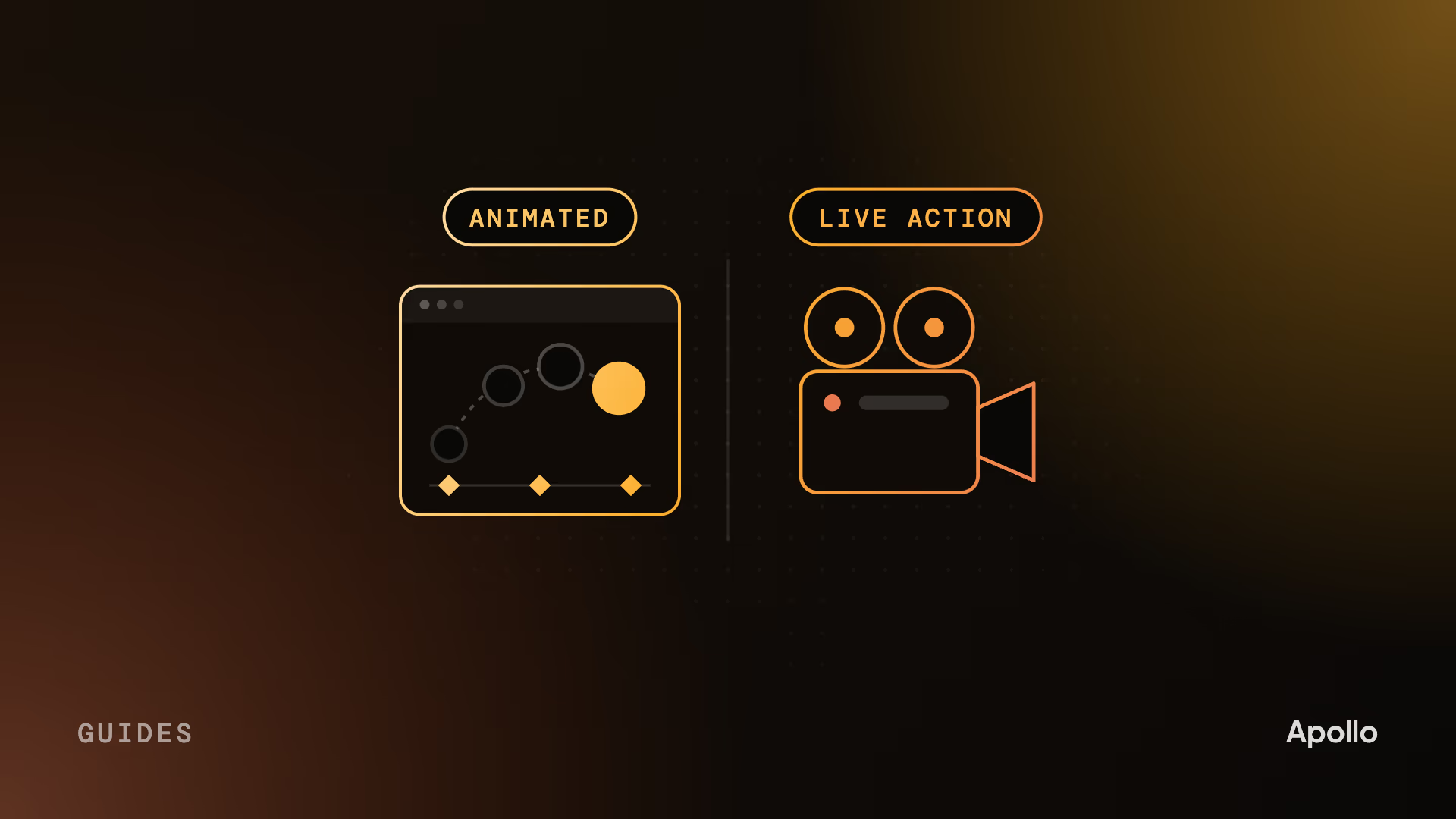
On this page What’s the difference between animated and live-action video?
Choose animation when the viewer needs to see how something works: abstract processes, invisible data, or a product interface that changes every quarter. Choose live action when they need to believe a person: a founder, a customer or the team behind it. Most B2B software videos use both, with animation for the product and people for trust.
The choice matters more in B2B software than almost anywhere else, because the two things buyers need from you pull in different directions. They need to understand a product that often has nothing physical to film. And they need to trust a company they may never have heard of with their data, their workflow or their budget. Animation is very good at the first job. It’s much weaker at the second.
What’s the difference between animated and live-action video?
Animated video is built frame by frame: motion graphics, illustration, 3D, or a rebuilt product interface. Live-action video is filmed with a camera: real people, real places, real screens. Hybrid video combines the two, and it’s what most B2B software teams end up making.
| Animated | Live action | Hybrid | |
|---|---|---|---|
| Best for | How the product works | Who stands behind it | Both, in one story |
| What it can show | Invisible processes, data, any interface | People, places, reactions | People for the why, animation for the how |
| When the product changes | Swap the changed screens | Reshoot anything on camera that dated | Update the animated parts |
| Where the time goes | Weeks of design and animation | A few shoot days, planned around people | Both, running in parallel |
Neither is the premium option. They answer different questions, and the rest of this guide is about working out which question your video has to answer.
When animation is the right call
When what matters can’t be filmed. Point a camera at most B2B software and you get a person looking at a laptop. The interesting part is happening inside the product, and only animation can show it.
The value is invisible. A model ranking leads, a pipeline syncing records, a security platform blocking a request. Animation can slow that down, draw it out and show cause and effect in a way no screen recording can.
The data is sensitive. Real dashboards carry real customer names. A rebuilt interface shows the same workflow with clean, invented data.
The product keeps changing. SaaS interfaces change every quarter. If the product screens are built as separate layers, updating one is an edit. Our guide to SaaS product demo videos covers when to capture the real interface and when to rebuild it.
You need other languages or a consistent series. Animated videos localize by swapping the voiceover and on-screen text. A series of feature videos can share one visual system, so the tenth looks like it belongs with the first.
Mural. A fully animated product video for a visual collaboration platform, where motion shows teams working in one shared space.
What animation can’t do is make the viewer trust a person. For that, you need a person.
When live action is the right call
When a person has to be believed. Some claims only land when a real human makes them, looks into the camera and means it.
Customers. A customer’s operations lead describing what changed in their own words is the most credible thing a B2B video can show. No animated character can stand in for that. Our guide to customer testimonial videos covers how to get one.
Founders and product leads. Early buyers are betting on the team as much as the product. A founder explaining why they built it answers a question no feature list can.
Launches and moments. A launch film with real people in a real place feels like an event. Animation can look polished and still feel like a slide.
Real work in real places. If your product changes what happens on a warehouse floor, in a clinic or on a sales team, showing the place makes the outcome concrete.
Awardco, an employee recognition and rewards platform. A customer story filmed in person, with a real customer telling it in their own words.
Most videos need something from both lists. So how do you decide?
What does the viewer need to believe?
This is the question we ask on every project, and it settles the format faster than any list of pros and cons. If the viewer needs to believe the product works, and the proof is a process they can’t see, animate it. If they need to believe the people, film them.
Most B2B software videos need both. The buyer has to understand the product and trust the company, often in the same 90 seconds. That’s why our guide to SaaS explainer videos describes the common mix: an animated open that frames the problem, product footage for the workflow, and a live-action moment that makes the outcome feel real.
Here’s our opinion, and the trade-off that comes with it. The live-action moment is usually the first thing cut from the budget, and it’s usually the wrong cut. Teams assume a shoot is complicated, or that their founder won’t be good on camera, and they end up with a video that explains the product clearly and gives the buyer no reason to trust whoever made it.
It does cost more than animation alone, and not every founder belongs on camera. Sometimes a customer is the better face, and sometimes the right person is an engineer who has never been filmed and turns out to be the most convincing voice in the company. The point is to decide on purpose, not to drop the person because a shoot sounded hard.
What goes into a live-action shoot
Less than most teams expect, as long as it’s planned. A B2B shoot is rarely a film set. It’s usually one day, a focused crew and a few people from your company or your customer’s.
Where to shoot. There are three options, and each suits a different story. A studio gives you control over light and sound, which suits product updates and founder pieces. On location puts the story somewhere that means something, like a customer’s office or a city at launch. At your office shows your real team in the place they actually work.
Who’s on camera. Actors are right when the video shows a scenario, like a support agent before and after, and you don’t want to ask your staff to act. Your own founder, engineers or customers are right when the video depends on them being real. Buyers can tell the difference.
Getting your people ready. Don’t hand a founder a script to memorize. Interview them instead, with questions that get them talking the way they would to a customer, and build the video from their answers. People who freeze reading lines are often excellent explaining what they built.
Getting more from the day. Once the crew, lights and people are in one place, shooting several videos costs far less than setting up again. Plan a launch film, a founder piece and a few short clips for one shoot day.
Customer stories need their own planning, and whether to film remotely or on-site is covered in the testimonial guide linked above.
Which costs more, and which takes longer?
It depends on the build, not the label. A simple motion-graphics video costs less than most live-action shoots. A fully custom 3D animation can cost more than a one-day shoot with your founder.
Published agency pricing puts motion graphics at the lower end of the market, character animation higher, and 3D and live action highest. Our explainer video cost guide covers what moves a quote and how to compare two of them.
Time works differently for each. Animation spends weeks in design and build, but it only needs your team for reviews. Live action spends fewer days in production, but those days depend on people’s calendars: your founder, a customer’s team, a location that has to be booked. Hybrid projects run both at once, so the shoot happens while the animation is being built.
How we decide with clients
We decide at the script, so the format comes from the story, not from what a studio happens to be good at. Animation and motion design are in-house, and our own crew shoots live action at our studio, on location or at your office, with actors or with your own people. When a video needs both, one team builds both.
Your technical reviewer signs off at script and storyboard, before anything is animated or filmed. A full project takes about three weeks, and several videos can come out of a single shoot day. You can see both kinds of work on our portfolio and our explainer video page.
FAQ
Is animation cheaper than live action?
Usually, but not always. Published agency pricing puts simple motion graphics at the low end of the market and 3D animation and live action at the top. A one-day shoot with your founder can cost less than a fully custom 3D animation. The price depends on how much is built or filmed, how many people and locations are involved, and how many versions you need.
Which is better for B2B: animation or live action?
Neither is better; they do different jobs. Animation is stronger for explaining how a product works, especially abstract software, sensitive data and interfaces that change. Live action is stronger for trust: customers, founders and the team behind the product. Most B2B software videos use both, with animation for the product and real people for the proof.
Can you combine live action and animation in one video?
Yes, and most B2B software videos do. A common structure opens with animation to frame the problem, shows the product in a captured or rebuilt interface, and uses live action for a founder, customer or team member who makes the outcome believable. Filmed footage with animated overlays is also common for product updates and launch films.
Which is easier to update when our product changes?
Animation, if it’s built for change. When product screens are built as separate layers, a changed interface is an edit rather than a rebuild. Live action dates when it shows an old screen on a laptop, so keep the product itself in animation or captured UI and keep people on camera talking about outcomes that won’t change next quarter.
Should our founder be on camera?
Often, yes. Early B2B buyers are betting on the team, and a founder explaining why they built the product answers questions no animation can. It works best as an interview rather than a memorized script. If your founder isn’t comfortable on camera, a customer, a product lead or an engineer can carry the same credibility.
How long does it take to make a live-action video?
Most of the time goes into planning and editing, not filming. A B2B shoot is often a single day, and the full project, from script to final cut, takes a few weeks. The biggest variable is scheduling: founders, customers and locations have to line up. Apollo Studio projects take about three weeks from kickoff and start at $5,000, all-in, with no add-ons.
Who makes live action video for B2B tech companies?
Three kinds of partner: general production companies with a crew, animation studios that subcontract their shoots, and B2B video studios that do both in-house. For a software company, look for live-action work with real founders and customers you can watch, animation under the same roof, and a script process that starts with your buyer rather than the format.
Cade is the founder of Apollo Studio, a B2B video studio in Utah making explainers, product videos, launch films and customer stories for SaaS, AI, and fintech companies.
Ready to make video that moves pipeline?
Apollo is a B2B video agency for SaaS, AI, fintech, and more. Tell us where your deals stall and we'll help you make the video that gets them unstuck.
Book a Call