Video Production Retainer or Project? How B2B Teams Should Buy
Can you hire a video team on a monthly retainer? Yes. When a retainer beats project work for B2B software teams, what it costs, and how to set one up.
 Cade September 27, 2026 10 min read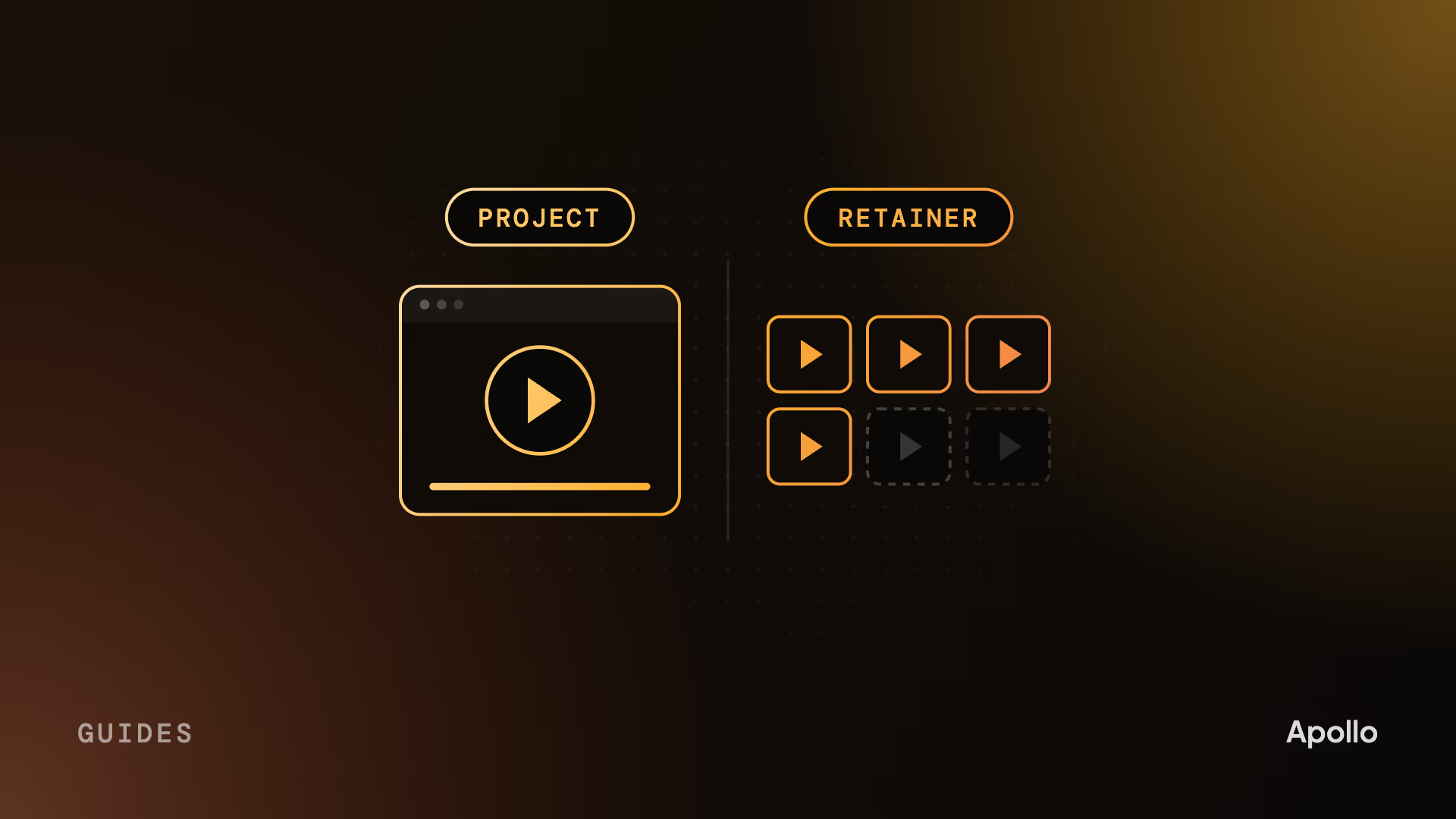
On this page Can you hire a video production team on a monthly retainer?
- Can you hire a video production team on a monthly retainer?
- Project, retainer, subscription or credits: which fits?
- When does a retainer make sense?
- Start with a project, even if you want a retainer
- What a retainer gives a software company
- What does a video production retainer cost?
- How to set up a retainer that works
- How we work with teams on retainer
- FAQ
Yes. Most B2B video studios offer a monthly retainer alongside project work: you pay a fixed monthly fee and the studio reserves a team and an agreed amount of production. Published agency pricing puts most B2B retainers at $5,000 to $10,000 a month. A retainer pays off once video becomes a steady rhythm, usually two to four videos a month.
The question matters more for software companies than for most buyers, because software doesn’t sit still. The product ships every few weeks, the interface changes, and marketing has a launch every quarter. So the real decision isn’t how to buy a video. It’s how to keep video in step with a product that keeps moving.
Can you hire a video production team on a monthly retainer?
Yes, and it comes in three shapes sold under the same word. Knowing which one you’re being offered matters more than the monthly number.
A true retainer reserves a team and a budget, and the work is planned month by month: a launch video one month, four short product updates the next.
A subscription sells the same fixed bundle every month at a set price. It suits teams that know exactly what they need.
Prepaid credits are a block of production bought up front and drawn down as needed. They suit bursty work around launches and events.
All three differ from a project, where each video is scoped, quoted and paid for on its own.
Project, retainer, subscription or credits: which fits?
It depends on how predictable your video needs are. If you can’t say what you’ll need three months from now, buy projects. If you can, a retainer or a subscription starts to pay for itself.
| Model | How it’s scoped | Right for | Watch for |
|---|---|---|---|
| Project | One video, quoted on its own | A first video, a flagship explainer, a launch film | Paying for onboarding again every time |
| Retainer | A reserved team and a monthly plan | Teams shipping product and campaigns on a cadence | Committing before you know the studio |
| Subscription | A fixed bundle each month | Repeatable formats, like social cuts and short updates | Work that doesn’t fit the bundle |
| Prepaid credits | A block of production, drawn down as needed | Irregular bursts around launches and events | Credits that expire unused |
| In-house hire | A salaried editor or producer | Constant volume of one kind of video | One person can’t cover every craft |
Most B2B teams we talk to sit between the first two rows: past one video at a time, unsure about a monthly plan.
When does a retainer make sense?
When video stops being an event and becomes a rhythm. Agencies that publish guidance put the threshold at roughly two to four videos a month, made consistently. Below that, a retainer mostly pays for a team to wait.
For a software company, the rhythm usually comes from one of three places:
- The release calendar. Every release that matters needs a short video showing what changed. Monthly releases mean monthly video.
- Launches. A quarterly launch needs a film, cutdowns for ads and a version for sales, all in the same few weeks.
- Sales asking for versions. One demo turns into a version for fintech buyers, one for security teams and one for the enterprise deck.
If two of those describe your team, you have a rhythm. If none of them do, you have a project, and you should buy it as one. A hero explainer or a brand film is a project, whoever makes it.
Even when the rhythm is there, we’d still start the same way.
Start with a project, even if you want a retainer
Buy your first video from any studio as a project. Even if you already know you’ll want monthly work, the first project is how you find out whether this is a team you want in your release meetings.
A project answers the questions a sales call can’t. Did the studio understand the product, or did your product lead end up rewriting the script? Did your technical reviewer trust the storyboard, or did every round bring new corrections? You only get those answers by making something together.
Some studios offer a three-month trial period on a retainer instead. That’s better than signing for a year, but it’s still a commitment made before you’ve seen a finished video. A project is the smaller bet.
Our guide to choosing a video production agency for a technical product covers what to test for. Once the project is done, moving to a retainer is easy, because the studio already knows your product. That knowledge is the part of a retainer worth paying for.
What a retainer gives a software company
Context that compounds. On a project, the studio learns your product, delivers, and moves on. On a retainer, it learns your product once, and every video after that starts further ahead. That matters more for software than for anything else we make.
The product only has to be learned once. The first video takes the longest: who the buyer is, what matters to them, which words your team uses and which it avoids. By the third video, the studio is asking better questions than your newest sales hire.
The interface stays current. SaaS products change every release. When a studio builds your product screens as separate layers, a changed screen is an edit, not a rebuild. On a retainer, that library of screens carries from one video to the next.
Review gets faster. In security, fintech and AI, a technical reviewer has to sign off every claim on screen. The first review is slow because they’re learning whether to trust the studio. By the fourth, they know it won’t show a feature that doesn’t exist.
None of that shows up in a per-video price. It shows up in how fast the fifth video ships.
What does a video production retainer cost?
Published agency pricing puts most B2B video retainers at $5,000 to $10,000 a month. Entry tiers start around $2,000 a month for lighter work, and retainers that reserve a larger team run above $10,000.
A retainer costs more in total than one or two projects, and less per video once you’re making several a month. Studios that publish the figure claim savings of 15% to 45% per video against project pricing, usually from about four videos a month.
The spread is wide because “a video” can mean a 15-second social cut or a fully animated explainer, and because some retainers buy a fixed list of videos while others reserve people. This guide to B2B video production retainers lays out named studios and their published pricing side by side.
Apollo Studio projects start at $5,000, all-in, with no add-ons. Retainers are scoped to each client, and the price per video is better on a retainer or bundle than on a one-off project. Our explainer video cost guide covers what moves the price of a single video.
How to set up a retainer that works
Plan it from your calendar, not from a package.
- Start from the release and launch calendar. List what ships in the next two quarters and which releases deserve a video. That’s your real monthly volume.
- Decide what you’re reserving. A fixed list of videos suits repeatable formats. A reserved team suits months that look different from each other, which is most software companies.
- Agree the commitment and what happens to quiet months. Six months is the common minimum. Ask whether unused capacity carries over.
- Name one owner on your side. A retainer briefed by four people turns into four vendors.
- Hold a short monthly planning call. What shipped, what’s next, and what the last video did.
Two mistakes come up again and again. The first is buying volume before you have a rhythm: signing for eight videos a month because the per-video price looked good, then scrambling for things to make. The second is treating the studio as a ticket queue. A retainer works when the studio is involved early enough to say which release deserves a video. Our map of the B2B video funnel is a good way to start that conversation.
How we work with teams on retainer
Teams come to us for a single project, or keep us on monthly as an extension of their own team. Most teams start with a project, so the retainer begins with the product already learned.
On a retainer, the work follows your calendar: a launch film one month, product updates and cutdowns the next. When there’s live action, we batch it, so several videos come out of a single shoot day. Your technical reviewer signs off at script and storyboard, before anything is animated, and that step gets quicker every month.
Vanta is a good example. We made their product promo, and we shoot an ongoing monthly product-update series for them at our studio, so each release gets its own video without starting from zero.
Vanta. A product promo built on the real UI, cut to work as a launch asset, an explainer and an ad. The monthly series is on our portfolio.
See how we work. On a first call, we’ll tell you whether your calendar calls for a retainer or a project.
FAQ
Can you hire a video production team on a monthly retainer?
Yes. Most B2B video studios offer monthly retainers alongside project work. You pay a fixed monthly fee, and the studio reserves a team and an agreed amount of production, planned month by month. Some studios sell fixed monthly subscriptions or prepaid credits instead. A retainer suits teams making two to four or more videos a month. For a single video, a project is simpler.
How much does a video production retainer cost per month?
Published agency pricing puts most B2B video retainers at $5,000 to $10,000 a month. Entry tiers start around $2,000 for lighter work, and retainers that reserve a larger team run above $10,000. Compare what each studio reserves, not just the fee.
Is a video retainer cheaper than paying per project?
Per video, usually yes, once you make several a month. Studios that publish the figure claim savings of 15% to 45% per video, typically from about four videos a month. In total, a retainer usually costs more than one or two projects. The bigger saving for software companies is time: the studio learns the product once, and every video after the first ships faster.
What’s the difference between a video retainer and a video subscription?
A retainer reserves a team and plans the work month by month, so one month can be a launch film and the next four product updates. A subscription sells the same fixed bundle every month, usually at a published price. Subscriptions suit repeatable formats like social cuts. Retainers suit B2B software teams whose needs change with the release calendar.
How long is a typical video production retainer?
Six months is the most common minimum term in published agency pricing, and some studios ask for twelve. Some offer a three-month trial period first. Month-to-month arrangements exist but usually cost more. Before committing to any term, make one video with the studio as a project, so you know whether the team understands your product.
Which B2B video agencies work on retainer?
Most specialist B2B studios now offer a monthly arrangement alongside project work, from full-service studios with reserved teams to fixed-price subscriptions and editing-only services. Apollo Studio offers monthly retainers and multi-video bundles for SaaS, AI and fintech companies. Compare studios on what each one reserves every month.
Cade is the founder of Apollo Studio, a B2B video studio in Utah making product videos, launch films and customer stories for SaaS, AI, and fintech companies. Teams work with us by project or on a monthly retainer.
Ready to make video that moves pipeline?
Apollo is a B2B video agency for SaaS, AI, fintech, and more. Tell us where your deals stall and we'll help you make the video that gets them unstuck.
Book a Call