Healthcare Explainer Videos: What They Cost, What to Make
What a healthcare explainer video costs, which format your product actually needs, and how a health tech or device company should choose a studio.
 Cade November 6, 2026 12 min read
On this page What a healthcare explainer video is, and who it’s for
If you sell software or devices into healthcare, the explainer video is the piece that has to make your product understandable to the committee deciding whether to buy it. Most studios in this category quote a price per minute of animation. Apollo Studio quotes a project: $5,000 to $50,000+, all in.
That difference matters more here than in most categories, because healthcare products are rarely explained well by one medium. A clinical workflow wants animation. A device in a real facility wants a camera. A platform sold to a hospital system usually wants both, and a studio that can only animate will tell you otherwise.
What a healthcare explainer video is, and who it’s for
Two different products share the name. One is patient education: a video a hospital or clinic makes to explain a procedure to the person about to have it. The other is a product video: a video a company makes to explain the software or device it sells to healthcare. This guide is about the second one.
The distinction is not pedantic. It changes who the script serves. Patient education succeeds when a worried person understands what happens next. A product video succeeds when a procurement committee, an IT lead and a clinical sponsor all come away with the same understanding of what your product does. Those are different films with different lengths, different vocabulary and different definitions of done.
If you are a hospital marketing to patients, almost everything below will be the wrong advice.
What a healthcare explainer video costs
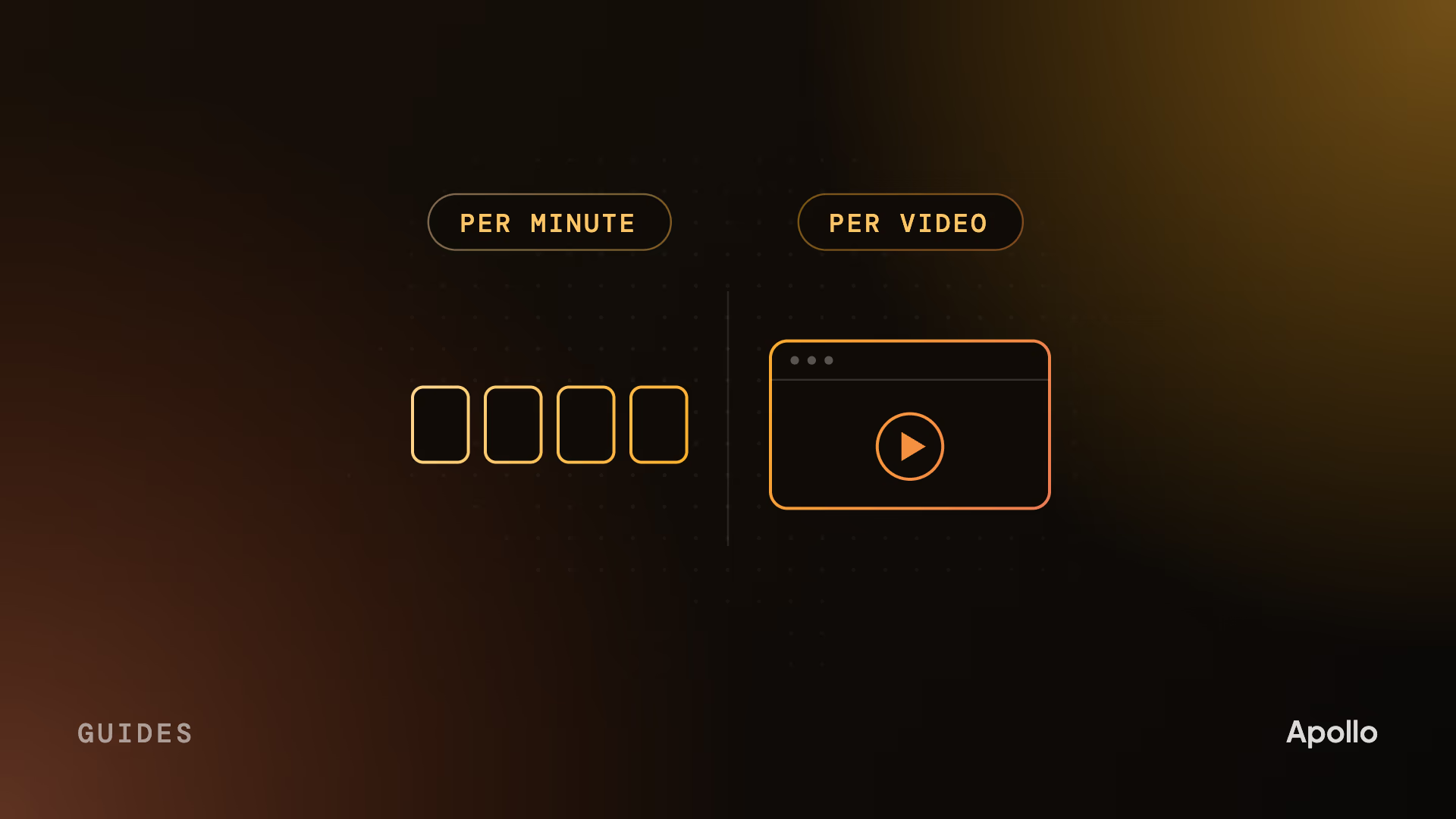
The category prices a minute of animation. We price the video.
That is the real difference between the quotes you are comparing. Most published rates in healthcare video are per minute, and almost all of them are for animation, because most studios selling into this category cannot shoot. A per minute rate tells you nothing about what a finished video costs you, because it leaves out the filming, the revisions and the versions, and those are where projects grow.
Apollo Studio projects range from $5,000 to $50,000+, all in. Script, storyboard, production, voiceover, sound, revisions and final cuts for every channel are inside that number. Nothing gets added once production starts. Published agency pricing across the category runs roughly $5,000 to $50,000, with enterprise work at the top end, so the range itself is unremarkable. What is still rare is anyone publishing one at all.
Where a project lands is scope, not hours:
| What moves the price | Why it moves it |
|---|---|
| Live action | A crew, a location and the number of shoot days. Shooting inside your own lab or facility adds travel. |
| Custom animation | Rebuilt product UI, mechanism animation or 3D. |
| Length and story | More scenes mean more script, storyboard and animation. |
| Versions | Each extra length, aspect ratio or language is a separate edit. |
Our full pricing breakdown explains how a quote gets built and what sits behind each of those four.
When you compare quotes, convert every one of them into the same unit before you look at the numbers. Ask what the figure covers, what is excluded, and what a second version costs. A cheap per minute rate with four excluded line items is not cheap.
Animated, filmed, or both
The honest answer is that most healthcare products need some of each, and the reason you rarely hear that is that most studios can only do one.
Animation earns its place when the thing you are explaining cannot be photographed. A data flow between an EHR and your platform. A mechanism inside a device. A workflow that happens across four screens and three departments. Film earns its place when the credibility comes from the thing being real: a device in a clinician’s hands, a customer saying the sentence you would otherwise have to claim yourself, a founder explaining the science.
| What it is good at | What it costs more of | |
|---|---|---|
| Animation | Mechanisms, data, software workflows, anything invisible | Build time, because every frame is made rather than captured |
| Live action | Proof, people, physical product, trust | Shoot days, crew, travel to your facility |
| Both | A product with a physical object and a software story | Both, which is why the brief has to be settled early |
We make both in house, which means the choice is a creative decision rather than a budget one. Animated or live action goes deeper into how we pick.
What to make first
Most health tech teams need the explainer and the demo before anything else, because those are the two that unblock a sales conversation. The rest follows the deal cycle.
| Format | The room it is for | Where it runs |
|---|---|---|
| Product explainer | The first meeting, where nobody knows what you do yet | Homepage, outbound, conference booth |
| Product demo | The evaluation, where someone wants to see it work | Sales follow up, deeper product pages |
| Customer story | The internal argument you are not in the room for | Late stage, proposal, procurement |
| Launch film | A dated announcement with a window around it | Feed, press, investor update |
A customer story is the one most teams defer and most regret deferring. By the time a health system is comparing you against two competitors, the person championing you is making your argument without you. A customer story is the only asset that speaks in that meeting.
The clinician is not the one signing
Here is the thing that goes wrong most often, and it has nothing to do with healthcare regulation.
The video gets briefed by someone who knows the product deeply, reviewed by a clinical expert who cares that it is accurate, and approved by a marketing lead who cares that it is polished. Nobody in that chain is the person who signs. So the video ends up pitched at the clinician: precise, thorough, credible to anyone already fluent, and incomprehensible to the operations lead and the CFO sitting in the same meeting.
The opposite failure is just as common. Pitch it at the buyer, strip out everything technical, and the clinician in the room quietly decides you do not understand the work. Their scepticism is the one that kills the deal, and it never gets said out loud to you.
A healthcare product video has to survive both readings at once. In practice that means the clinical detail stays, but it is never the thing carrying the argument. You show enough of the workflow that a clinician recognises their own day in it, and you keep the spine of the video on the problem that the person signing is paying to make go away. Getting that balance right is a writing problem, settled in the script, before anybody has spent money on animation.
How we make video for health tech companies
Apollo Studio makes video for Vanta in compliance automation, HiddenLayer in AI security and Mural in collaboration software. Technical products, technical buyers, and in two of those three a regulated category. It is the same job as a clinical workflow platform, and you can watch the work on our portfolio.
The order we work in is the same on every project, and it is the part that matters when a video has to pass clinical or legal eyes.
- The script comes first. We agree who the video is for and what it says before anything is designed. If there are claims in it, that is the natural point for your team to look at them.
- The storyboard is approved before production. Scenes, on screen words and the order of the argument, laid out and agreed while they are still quick to change.
- Then it gets built. Production and post run against the approved storyboard, so the conversation at the end is about craft rather than about what the video says.
None of that is a healthcare specific track. The reason it matters more here is arithmetic: an objection raised against a storyboard costs a storyboard edit, and the same objection raised against a finished edit costs the edit. How your own review runs, and who signs, stays your call. Our guide to how long video production takes covers the general timeline, though a project with clinical and legal review in it gets scoped at kickoff rather than quoted from a chart.
How to choose a healthcare video production company
Ask five questions, and listen for whether the answers are specific.
- When does legal or clinical review see the work? You want a studio whose process puts your reviewers in front of a script and a storyboard, not a finished film.
- Who writes the script? If scripting is outsourced to a writer briefed once, the person who understood your product is not the person explaining it.
- What is actually inside the price? Get the exclusions, not the number. Ask what a second version costs and what happens when a reviewer rejects a claim.
- Can you shoot, or only animate? A studio that can only animate will recommend animation for a product that needed a camera.
- Who owns the finished video, and which licences are included? Music, voice and stock all carry terms, and the time to find out is before the quote.
On partner type: a template studio is the right call for internal or short lived content, a freelancer works when you already have the strategy and need execution, and an in house team makes sense once the volume is steady and predictable. A specialist studio earns its price when the product is hard to explain and the video has to carry weight in a deal. Choosing a studio for a technical product has the longer version of that argument.
What nobody can tell you from a website is whether a studio understood your product. So make them prove it. Explain the thing you find hardest to explain, and listen to how they say it back.
FAQ
How much does a healthcare explainer video cost?
Apollo Studio projects range from $5,000 to $50,000+, all in, with script, storyboard, production, revisions and final cuts inside the number. Most projects land between $15,000 and $30,000. Where yours sits is scope rather than hours: how much gets filmed, how much is animated, how long it runs and how many versions you need. Most published rates in this category are per minute of animation, so convert before comparing.
What should a health tech company look for in a video agency?
Look for a studio that writes its own scripts, that can shoot as well as animate, and whose process puts your reviewers in front of a script and storyboard rather than a finished edit. Ask what is inside the price and what is excluded. Then ask them to explain your product back to you, which is the only part of the evaluation a website cannot fake.
Who makes product videos for EHR and medical software companies?
Studios that specialise in technical B2B products rather than in healthcare marketing generally. The useful filters are whether they have made video for software sold to committees, whether they can rebuild product UI accurately rather than approximating it, and whether they publish what they charge. Category experience matters less than whether they can explain something complicated to someone who is not an expert.
Is animation or live action better for a medical product?
Neither is better. Animation is for what cannot be photographed: mechanisms, data flows, software workflows across systems. Live action is for what gains credibility by being real: the device in use, a customer on camera, a founder explaining the science. Products with both a physical object and a software story usually need both, which is a decision worth making before anyone quotes you.
Do you need to be HIPAA compliant to make a healthcare video?
Apollo Studio works from material you provide and does not need access to patient data to make a product video. If a project would involve protected health information, that gets scoped and agreed before anything starts, under your own agreements and policies. Any studio claiming a compliance certification as a selling point is worth a second question about what exactly they were audited against.
How long does a healthcare video take when it has to pass clinical and legal review?
It depends on the project and on how your own review runs, so we scope it at kickoff rather than quoting a number. What does not change is the order: script, then storyboard, then build, with approvals happening before production rather than after it. That ordering is what keeps a late objection from turning into a rebuild.
What is the difference between a patient education video and a product explainer?
A patient education video is made by a provider to help someone understand their own care. A product explainer is made by a company to explain the software or device it sells into healthcare. They have different audiences, different success conditions and different review requirements. A studio good at one is not automatically good at the other, and the brief should say which you are buying.
Who are the best healthcare video production companies?
Judge them on four things: whether they publish a price, whether they can shoot as well as animate, whether the people doing the work are the people on your call, and whether their process puts reviewers in front of a storyboard. Ranked comparisons are worth reading for the shortlist, not the order. This list of B2B video production companies is a reasonable starting point.
Cade is the founder of Apollo Studio, a B2B video studio in Utah making product videos and customer stories for SaaS, AI, and fintech companies, including teams selling into healthcare.
Ready to make video that moves pipeline?
Apollo is a B2B video agency for SaaS, AI, fintech, and more. Tell us where your deals stall and we'll help you make the video that gets them unstuck.
Book a Call